



The new film by Alice Winocour follows three women — a director, a model, and a makeup artist — whose lives intersect during Paris Fashion Week. Angelina Jolie plays the filmmaker, while one of the supporting roles is performed by Ukrainian model Yuliia Ratner. In ‘Couture’, Ratner plays herself — she and Winocour met a year before filming began, when the director was looking for a Ukrainian refugee for the role. Winocour developed the character’s story based on what Yuliia shared and her impressions from their conversations.
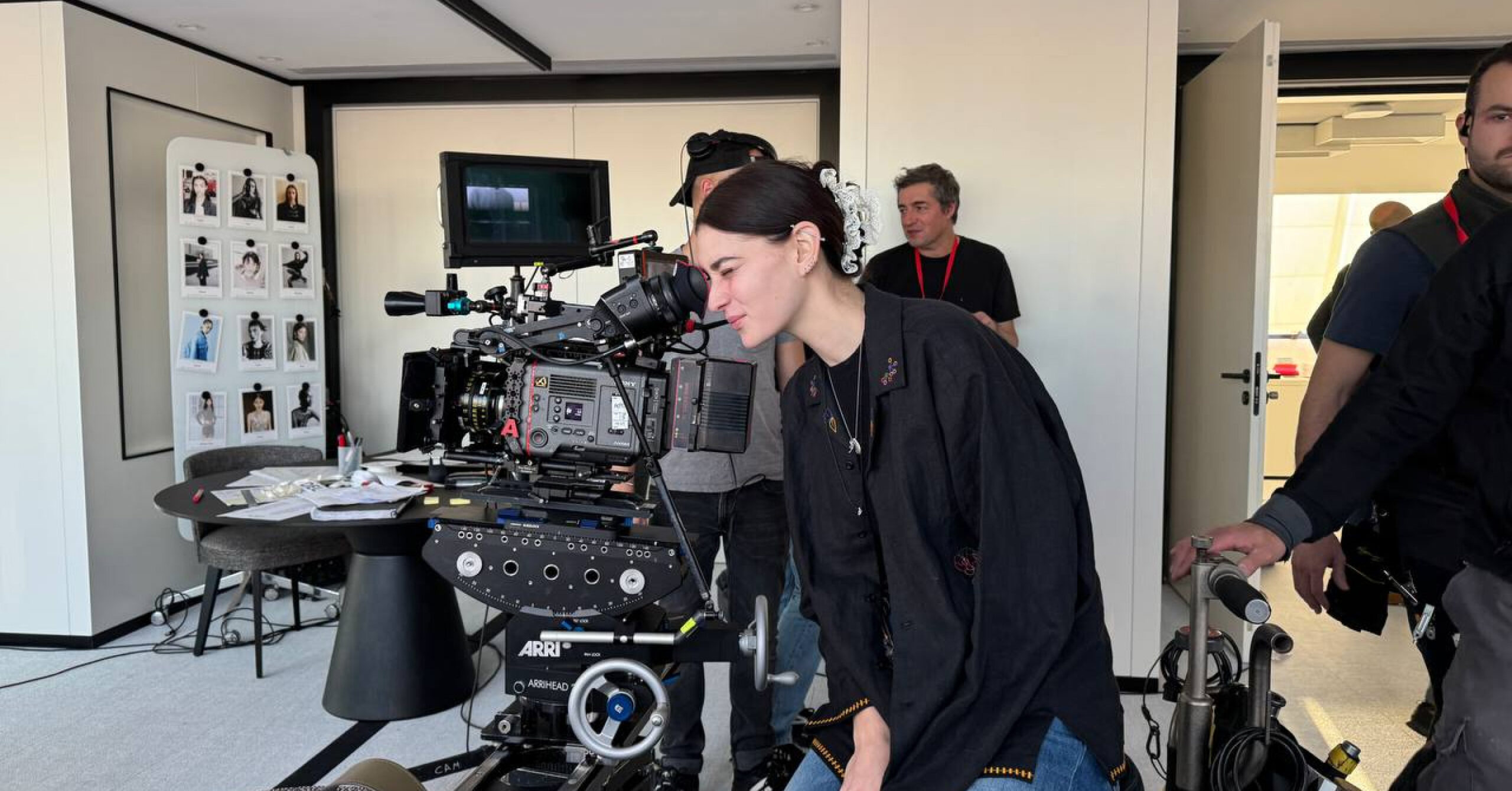
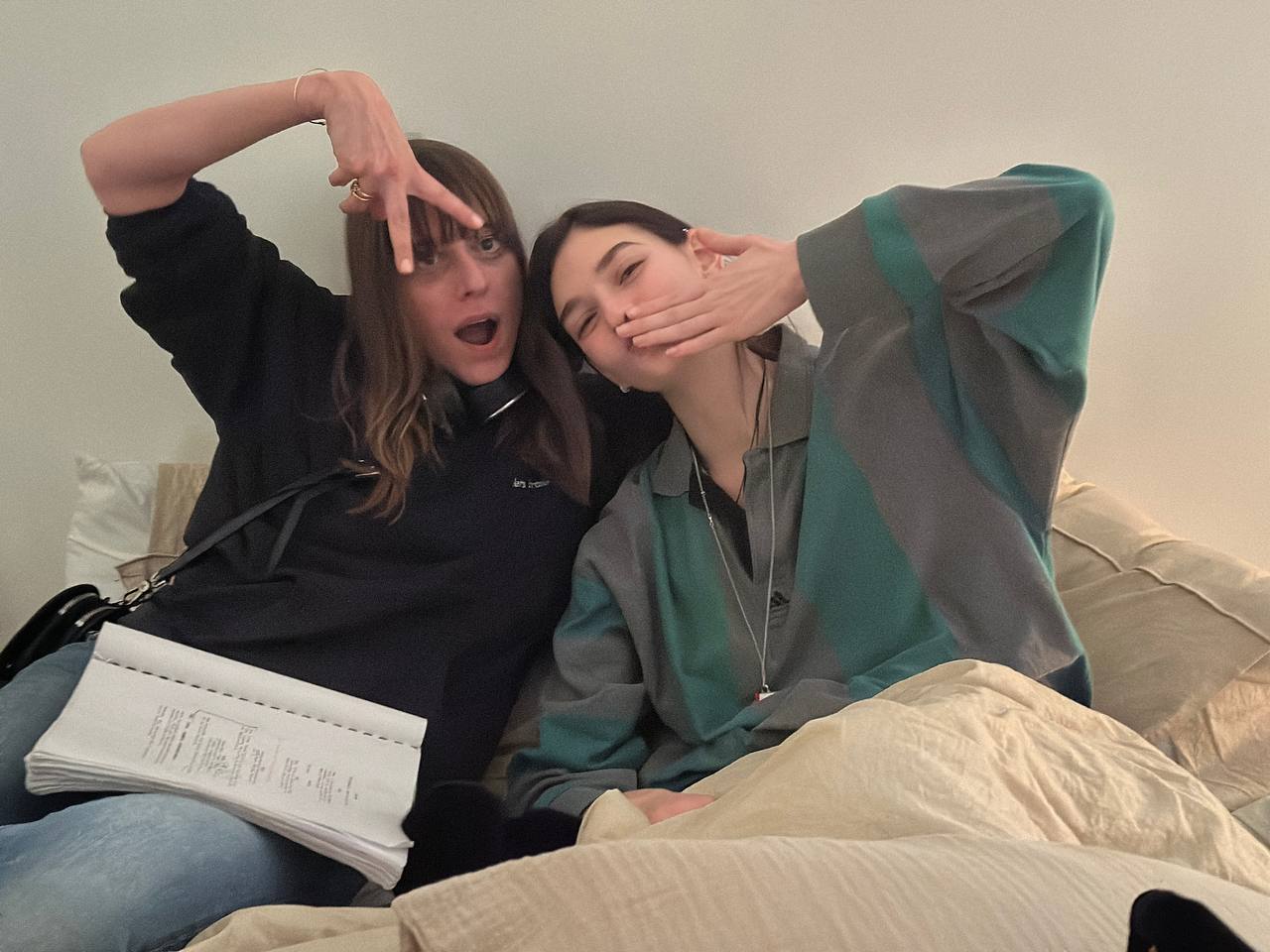
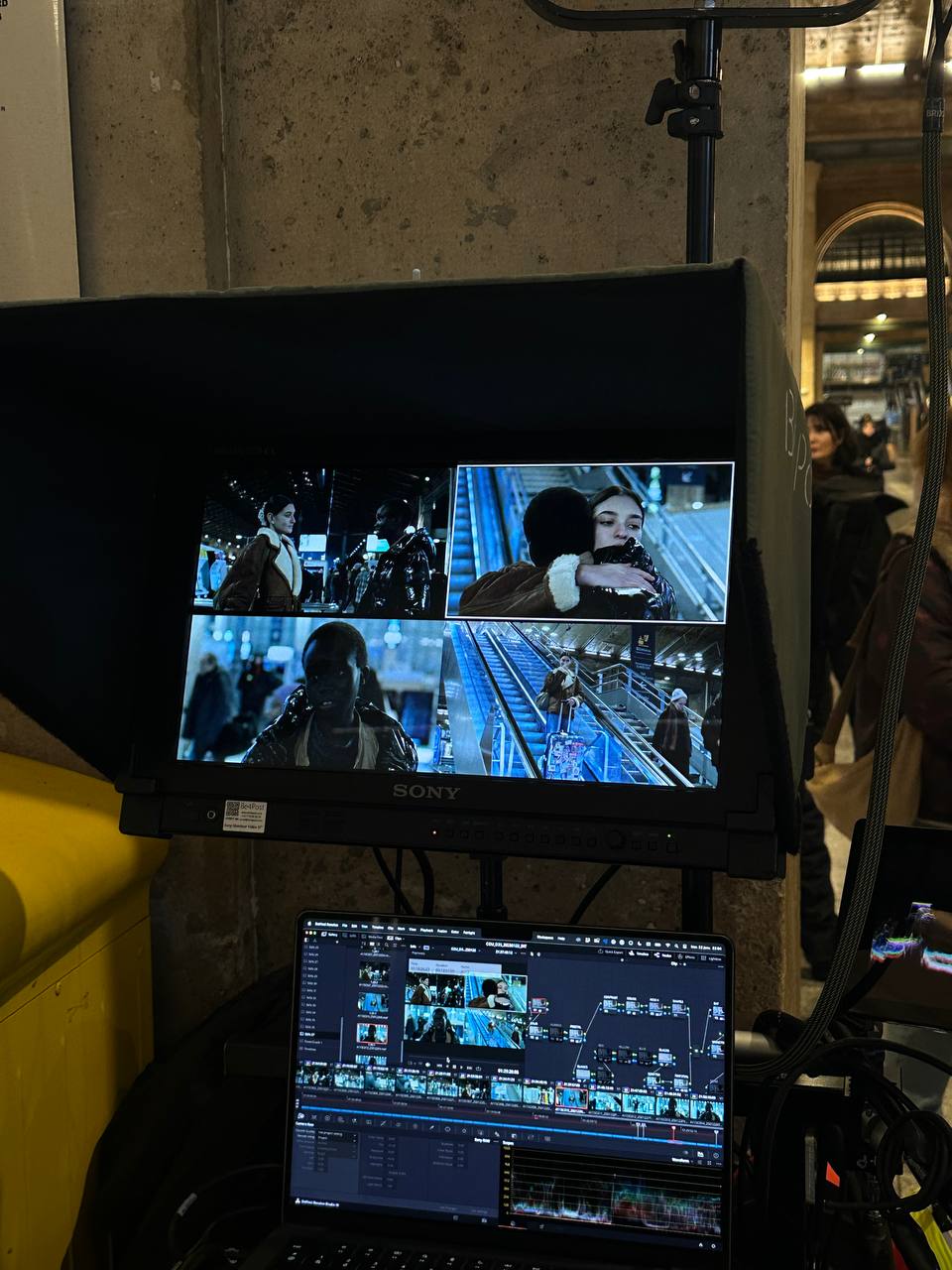
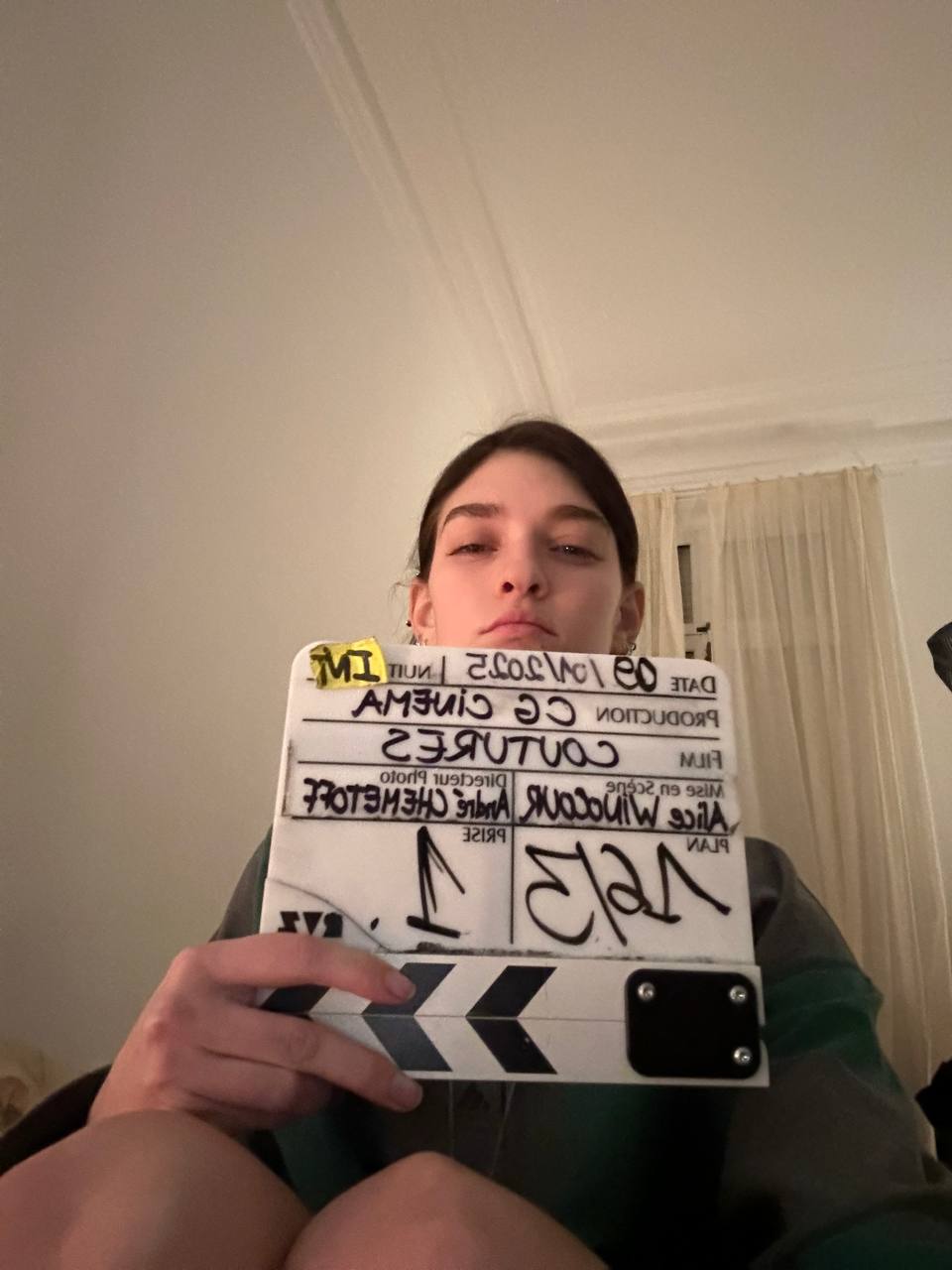
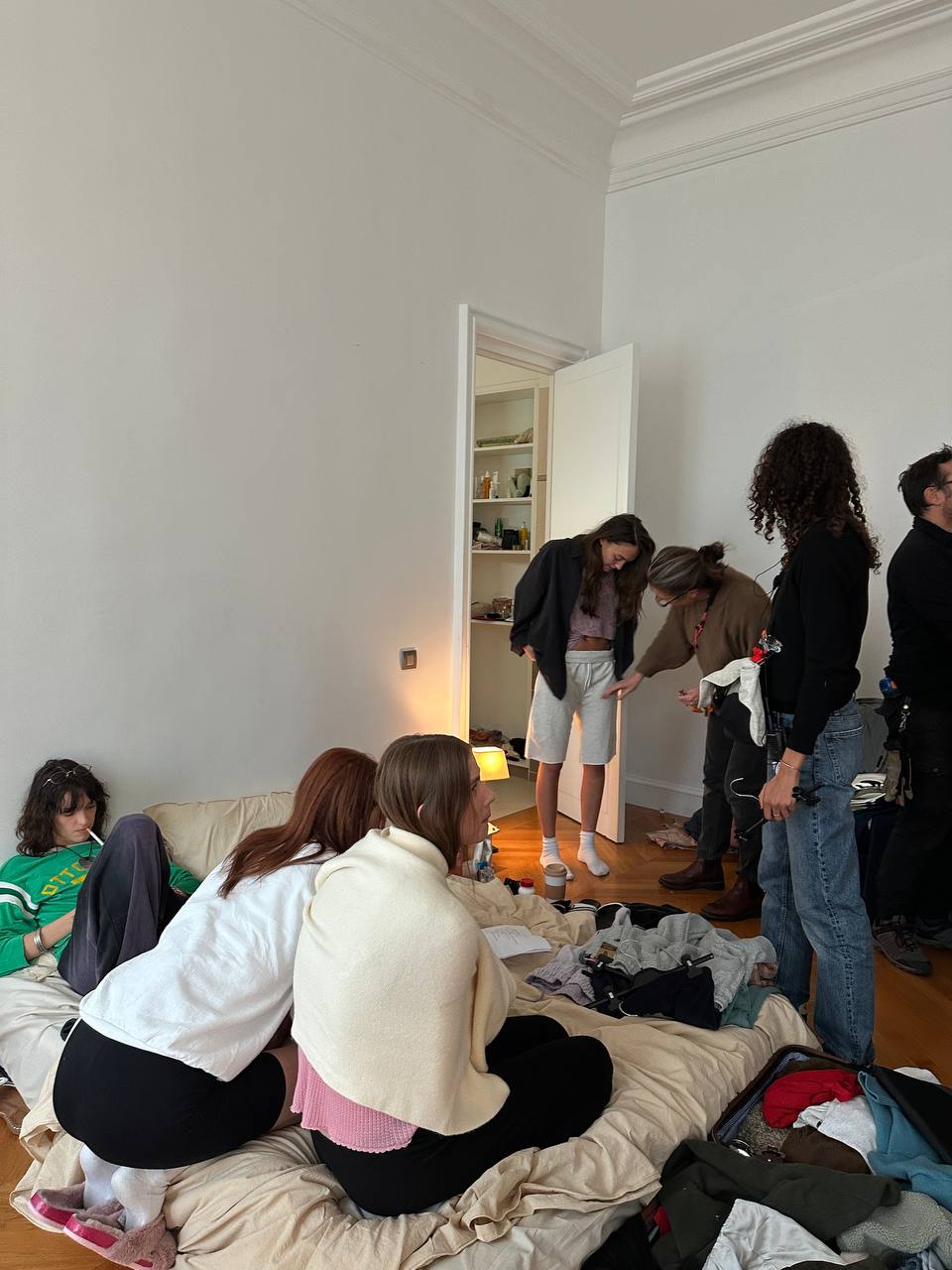
In an interview with DTF Magazine, Yuliia Ratner speaks about her role in ‘Couture’, the emotional challenge of playing herself, deleted scenes, and Russians in the European fashion industry. She also shares exclusive behind-the-scenes photos
About ‘Couture’
Jolie’s character is Maxine, a filmmaker. She learns she has breast cancer and begins a relationship with a colleague, played by Louis Garrel.
Ada is played by model and actress Anyier Anei, for whom this role marks her debut. She plays a refugee from Sudan who enters the modeling industry after fleeing the war in her home country.
The makeup artist Angèle, ‘who works in the shadows of the runway’, is played by Swiss actress Ella Rumpf (‘Raw’).
‘This is a film about women’s bodies. It tells women who bear scars that we can be stronger by sharing our wounds. There is also something deeply political, for me, in telling the story of a collective rather than an individual destiny — I wanted to restore depth and complexity to women across generations and backgrounds, beyond the superficial images we’re so often given’, Winocour says about the film.
‘Couture’ is the first fiction film allowed to be shot inside Chanel’s couture atelier in Paris.
The film premiered at the Toronto International Film Festival. It was also screened at film festivals in Rome and San Sebastián.
Yuliia Ratner on her role in ‘Couture’
— In the film, you play yourself. How closely does the story in ‘Couture’ reflect your own?
— The story was written based on what I shared and, I think, on director Alice Winocour’s impressions from our personal conversations. Besides my character, parts of my story are also reflected in the protagonist, Ada, played by Anyier Anei. About ten years ago, when I was still a teenager, I came to Paris in much the same way to try my luck in the tough, adult world of fashion.
— How much influence did you have on how your character would be portrayed in the film?
— In fact, I had complete control. The main task on set was to ‘be real’. Most of the scenes were built on improvisation. But even when we worked with the script and something felt off or out of place, we had the freedom to suggest alternatives.
The joke about Zaporizhzhia (unfortunately mistranslated in the Ukrainian dub), where I say that Zaporizhzhia is a ‘great place… to leave’, was improvised, and Ada’s laughter is genuine. Because the crew was speaking French, she was the only one who understood the joke at that moment.
— How challenging was it to portray yourself on screen?
— It wasn’t difficult. The easiest part was breaking down in a scene that, unfortunately, didn’t make it into the final cut. It was meant to offer a deeper insight into my character’s emotional state — a scene where I’m reading the news from Ukraine. But honestly, it didn’t feel like acting. I looked up and realized that half the crew was crying with me.
— You suggested adding scenes to give more context. Were they based on your own experiences, or on those of other people you knew?
— These weren’t specific stories. Going back to the previous question, the scenes I suggested were meant to help explain my character’s behavior to the audience. My first scene begins with a conflict, and I really didn’t want my character to come across as just ‘aggressive’, especially since, according to the story, I had spent several days traveling from Kyiv, and the events take place at the beginning of the full-scale invasion. However, the original script lacked a clear explanation of these circumstances and the overall context.
That’s how the scene with the exchange of voice messages with my boyfriend appeared in the film. There was also another one — the scene where I was watching the news, which I mentioned earlier — but it didn’t make the final cut.
— You initiated adding Ukrainian context to the script during the pre-production stage. Did you feel a sense of responsibility for how these emotions would be portrayed on screen?
— The Ukrainian context in the film was the director’s initiative. We first met a year before filming began, and initially my character was meant to be a refugee. During the process, we explored different ways of reminding the audience about the war in Ukraine. At one point, we were even looking for locations in Kyiv for a video call where the aftermath of a missile strike would be visible in the background. But in the end, we didn’t film that either.
I think the director left some space in the script, giving me the freedom to bring my own vision of how to convey this theme to the audience. I would have kept the scene of watching the news — it was truly sensitive and revealed a softer side of the character. But even as a supporting character, I was given a great deal of control on set, for which I’m incredibly grateful to Alice and the entire team.
— In one of the scenes, your character speaks Ukrainian with a loved one who is under attack. Was it emotionally difficult to recreate that state on set?
— Not really, considering the voice message was from my real partner in Kyiv, who for four years now has been living under Russian shelling almost every night. Even though messages like these have become part of everyday life for Ukrainians and we’ve adapted, you never stop feeling fear for your loved ones, anxiety, and pain because of everything that is happening.
I didn’t have to show any emotions or feelings — I just had to stop hiding them, because they are here, within me, always, for all four years.
— In ‘Couture’, your character speaks, among other things, about leaving her hometown and mentions the war in Ukraine. How aware is the European fashion industry of Russia’s aggression, and how interested is it in what is happening in Ukraine?
— They aren’t aware. I don’t even want to repeat the absurd things foreigners have said and continue to say to me. Only a few are informed — those who consciously choose to stay engaged, mostly because they have close ties to Ukrainians. I’ve come to a fairly simple conclusion: it’s impossible to describe or explain war, especially a modern one, to someone who has never experienced it. I found understanding among Iranians, Kosovars, and Georgians.
— It seems that the fashion industry is increasingly collaborating with Russians: we see them on the runways, and brands are creating collaborations with Russian creatives. Do you notice these changes, and why do you think this is happening?
— It isn’t just happening now — it has always been this way. I’m sorry to be the bearer of bad news, but Russians have always been everywhere — and still are. They open shows, become the faces of brands, and star in campaigns. Sometimes you come to a casting for a French brand and the entire team is Russian. You come to a shoot and discover on the spot that the photo and video crew is Russian. Or that the other model in the frame is Russian. They’re integrated into every part of the process.
Honestly — it’s hard. It’s upsetting, infuriating, and triggers hundreds of other negative emotions. If you leave a job like that, you’ll be replaced within 20 minutes, and only Russian names will remain in the ‘credits’. And it turns out that it’s not them, but us who are being erased.
The only right decision is to focus all our attention on Ukrainians: to support, promote, and make them visible and talked about. Artists, models, musicians, actors, athletes, creators, designers, photographers — everyone who works toward the high-quality promotion of our culture.
Instead of leaving an angry comment under a post by a Western brand that has hired Russians, leave five positive comments under posts by Ukrainians whose work resonates with you. It is vital for us to prioritize supporting and promoting Ukrainians.
— Your career began very early, at the age of 15, and since then you have been constantly moving between cities: Kyiv, Paris, Milan. Has your sense of ‘home’ changed since the start of the full-scale invasion?
— I have one physical home, and it’s forever — my apartment in Kyiv’s Solomianskyi district. This place is me, and I am this place. Mentally, home for me is in the arms of my mother and the person I love. Everything else is temporary, and I am only a guest in it.