





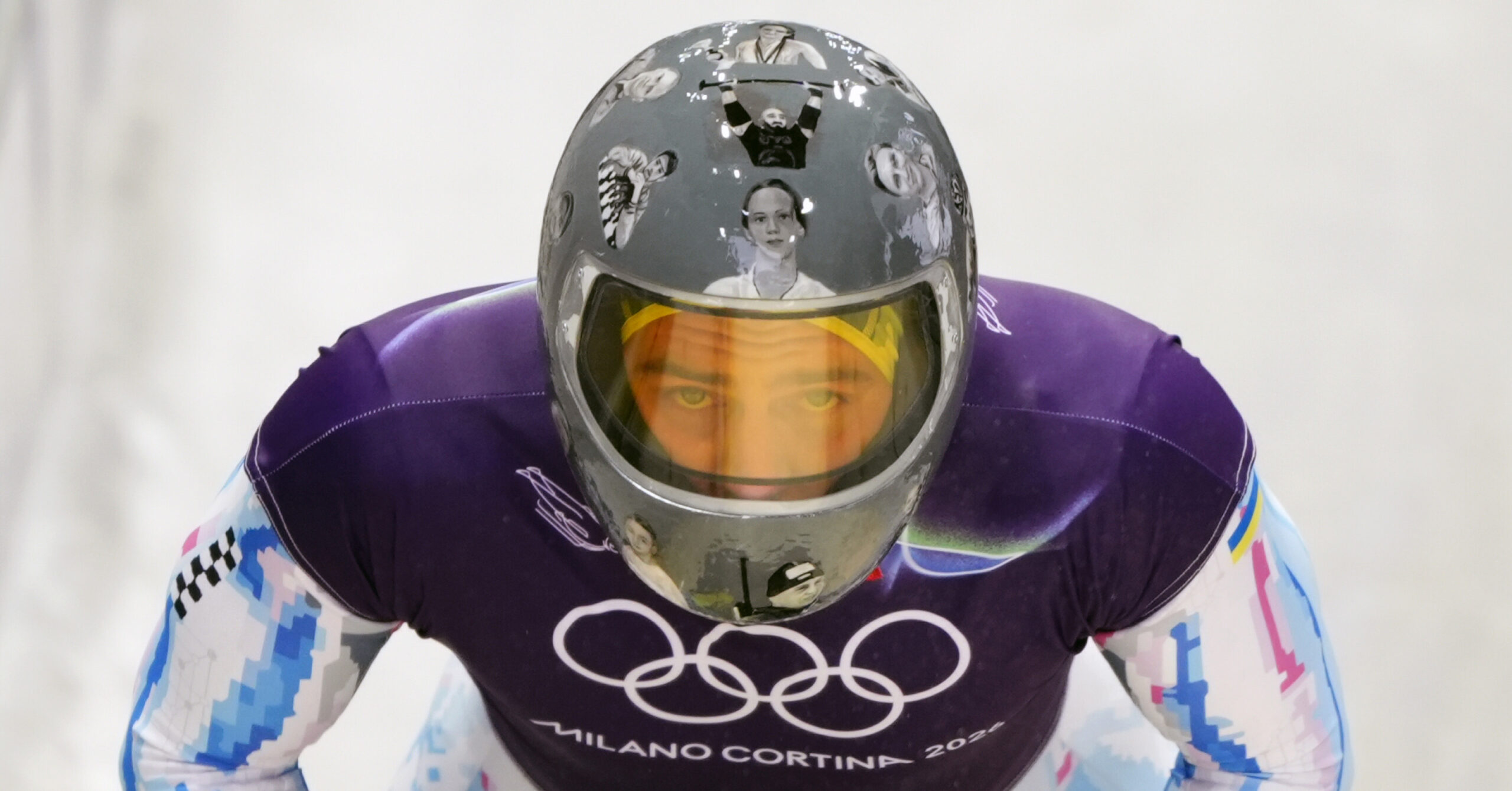
The International Olympic Committee (IOC) has banned Ukrainian skeleton athlete Vladyslav Heraskevych from taking part in official Olympic training sessions and competitions while wearing a helmet featuring portraits of Ukrainian athletes who were killed during the war. The athlete shared the news on Instagram
‘A decision that simply breaks my heart. The feeling that the IOC is betraying those athletes who were part of the Olympic movement, not allowing them to be honoured on the sports arena where these athletes will never be able to step again’, Heraskevych said.
Heraskevych’s team is currently preparing an official request to the IOC to receive an explanation regarding the ban announced by Toshio Tsurunaga (Head of Games Services for National Olympic Committees and Olympic Villages).
Переглянути цей допис в Instagram
At the same time, snowboarder Roland Fischnaller was allowed to place the russian flag on his helmet — even though russian and Belarusian national symbols are banned at the 2026 Olympic Games.
The Milan Games are already the seventh for 45-year-old Fischnaller; he first competed at the Olympics in Salt Lake City in 2002. To mark this, the athlete placed the flags of the host countries of the Winter Olympic Games he has taken part in on his helmet, including russia, which hosted the tournament in Sochi in 2014.
What the IOC says and proposes
At a press conference on February 10, IOC spokesperson Mark Adams confirmed that Heraskevych would not be allowed to compete in a helmet featuring portraits of fallen athletes. ‘The IOC fully understands the desire of athletes to remember friends who lost their lives in that conflict, — Suspilne Sport quotes Adams as saying. — He has done that in training and on social media he has expressed his feelings but what we have said is this helmet contravenes the… guidelines’.
At the same time, he spoke of a compromise and an exception the IOC is willing to make — allowing Heraskevych to wear a black armband during competitions: ‘We feel this a good compromise. At previous Games, athletes were not even allowed to wear an armband’.
Adams also said: ‘There are rules that are clear to all National Olympic Committees. People can request an exception, but there must be a compelling reason for this. If the reason is compelling, it will be considered. People can express themselves however they want to elsewhere. […]. As for freedom of speech, athletes are completely free to express their opinions on any issue on social media’.
Zelenskyi’s reaction to the IOC ban
Volodymyr Zelenskyi thanked Heraskevych on his official Telegram channel, noting that the truth about fallen Ukrainian athletes ‘cannot be inconvenient, inappropriate, or called a ‘political demonstration at a sporting event’’.
‘It is a reminder to the entire world of what modern russia is. His helmet bears portraits of our athletes who were killed by russia: figure skater Dmytro Sharpar, who was killed in combat near Bakhmut; Yevhen Malyshev, a 19-year-old biathlete killed by the occupiers near Kharkiv; and other athletes whose lives were taken by russia’s war.
And this is what reminds everyone of the global role of sport and the historic mission of the Olympic movement itself — it is all about peace and for the sake of life. Ukraine remains faithful to this. Russia proves the opposite’, the Ukrainian president wrote.
Background
Heraskevych held his first training sessions at the Olympics in a new uniform and a helmet featuring portraits of fallen Ukrainian athletes.
‘The helmet for this Olympics is quite special. It features some of the athletes who have died over the past four years, — Heraskevych said in a comment to Suspilne Sport. — […] These were people who were closely connected to sport their whole lives, supported us, and were our friends’.
Commenting on the reaction of the International Olympic Committee, the athlete noted that there were ‘some issues regarding the helmet’ and ‘some remarks’.
‘What will the reaction be if they ban me from competing in this helmet? We don’t know yet, but we are ready to fight for the right to compete in it. […] We are ready to go to court, to CAS — anywhere. I do not consider this a violation of any rules’.
Heraskevych will compete at the Olympic Games on February 12 and 13. The events will be broadcast by Suspilne Sport.