





At the beginning of the full-scale invasion, chemist and researcher Artur Mylin was among the volunteers who lined up at military enlistment offices. He defended the Kyiv region and later the Donetsk region as part of the 131st Brigade. In October, his service was interrupted by a severe injury that led to the amputation of his leg. What followed was a long road to recovery — a year and a half in hospitals and rehabilitation centers from Dnipro to Lviv.
He then turned to sports, which became part of his physical recovery and a way to regain control over his body. From local competitions to international tournaments — over the past two years, he has participated in twenty different events. At one of these competitions, ‘Rukh’, DTF Magazine met Artur to record his story
The highway out of hell
A huge pavilion is filled with loud rock music — from the Third Assault Brigade’s album ‘Epoch’ to classic AC/DC and Metallica.
To the sound of ‘Highway to Hell’, two dozen men and one woman do push-ups in a fast rhythm. They perform the exercise on a special Paralympic bench designed for people with leg injuries or amputations.
The old hit about a ‘highway to hell’ carries a special symbolism here. Each of the participants has already been through their own personal hell — for some it was near Lyman, for others in Avdiivka, and for some in Bakhmut. But the most important thing is that each of them found their way back out.
The power cuts out from time to time, and the audience keeps the energy up with their applause.
This is the atmosphere of the ‘Rukh’ multisport competition. Despite being organized by the 3rd Army Corps, it brings together servicemen and veterans not only from the ‘Third’ brigade.
Some of the disciplines were adapted to meet the needs of people with injuries: powerlifting (bench press), archery, and rowing were moved to simulators, while boxing was converted into a cyber format. This alternative was developed together with the Boxing Federation, as traditional boxing carries a higher risk of injury and requires more complex categorization of participants — not only by weight but also by the type and degree of injuries or amputations. In the final, the top performer among the twenty boxers competed against Denys Berinchyk using a VR headset.
Переглянути цей допис в Instagram
The organizers of ‘Rukh’ have set an ambitious goal — to turn it into a Ukrainian version of the Invictus Games, drawing on their own experience of participating in international competitions. In particular, Yuliia Paievska has already competed at the Invictus Games — both before the full-scale war and a year after her release from captivity. For the project’s main initiator, Tymur Leon, this experience came from participating in the Marine Corps & Air Force Trials in the United States.
‘I went to the States and realized how high the level of international competitions is. We need to develop our own projects, our Ukrainian product, because we have far more veterans and service members, — he says, adding: — We need to help them reintegrate into society, and in general, it’s not the veterans who should have to get used to it; society must adapt to the veterans. That’s why we need to improve quality so that people from other countries come to us, rather than the other way around’.
It is very loud in the middle of the hall: on one side, the archery competition has begun — one of Taira’s favorite disciplines. Participants line up in front of the targets. On the other side, there’s powerlifting, where the hosts invite service members to test their strength in the bench press. Other ambassadors of the competition — Oleksii Soloviov and Oleksii Novikov — are bench pressing around 250 kg, which is truly a world-class performance.
Tymur talks about how such competitions are important not only for physical but also for mental rehabilitation — for fostering team spirit, a sense of community, and the opportunity to compete alongside fellow service members. Tymur himself is an active serviceman of the 125th Separate Heavy Mechanized Brigade of the 3rd Army Corps, who has undergone a recovery course after being wounded near Bakhmut.
‘Sport, in essence, is rehabilitation. While preparing for competitions, participants have a goal. They achieve it and don’t even notice how their physical condition improves in the process’.
His words are drowned out by a UGV circling nearby. Operating this unmanned ground vehicle (as well as flying FPV drone simulators) is one of the training activities at ‘Rukh’. Or rather, not operating but testing — two men were driving it back and forth and laughing. The program also combined miltech with ethnoculture: the Pavlo Virsky Ukrainian National Folk Dance Ensemble performed at the opening ceremony.
Переглянути цей допис в Instagram
The hosts announced the next participant: Artur Mylin stepped onto the platform. He returns to his beloved powerlifting again and again. Three years have passed since he lost a leg while serving as a grenade launcher operator in Terny, Lyman community, but sport has given him a new start.
The chance to stand again
Artur gradually regained control of his body. He believes that every service member after an injury should first read the book ‘Guide for Service Members After an Injury’.
It’s a fairly pragmatic piece of advice, but a useful one: ‘People often feel lost about what to do — whether they need to raise money for a prosthesis or for rehabilitation. The state covers most things, but you need to understand how it all works’.
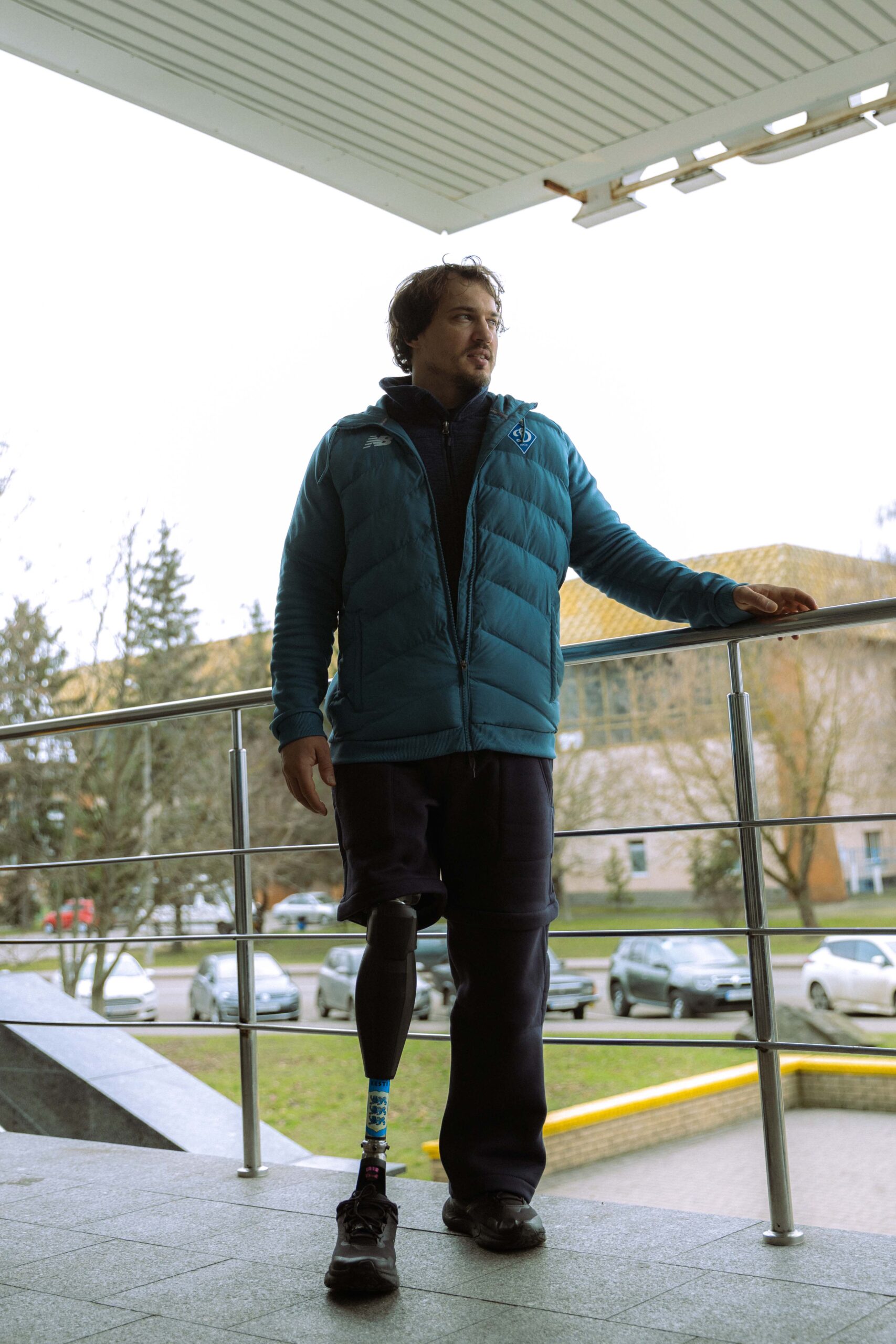
During physical rehabilitation, after a blast injury and limb loss, the body recovers very actively: osteophytes can form on the bones, and neuromas may develop — both of which often require surgical removal.
‘It may seem like the leg has healed, but the recovery processes are still ongoing, and they can actually be quite harmful’.
When this phase ends, you have to master a new way of moving and regain control of your body with a prosthesis.
‘It’s a mix of physical and mental recovery, helping the brain understand that the limb is with you again, which helps reduce phantom pain. Especially when you put on pants and see yourself as you were before. It helps a lot mentally’.
Artur recalls visiting his friends after getting his prosthesis. ‘I was standing, not lying down or sitting. It really helps emotionally — the chance to stand again’.
A study by ‘Come Back Alive’ on adaptive sports states that the main challenge in Ukraine is the lack of equipment and specialists. However, Artur, who has been involved in sports his entire life, managed to find good coaches while preparing for and participating in various competitions.
‘Thanks to them, I keep improving and achieving better results than I had before my injury’.
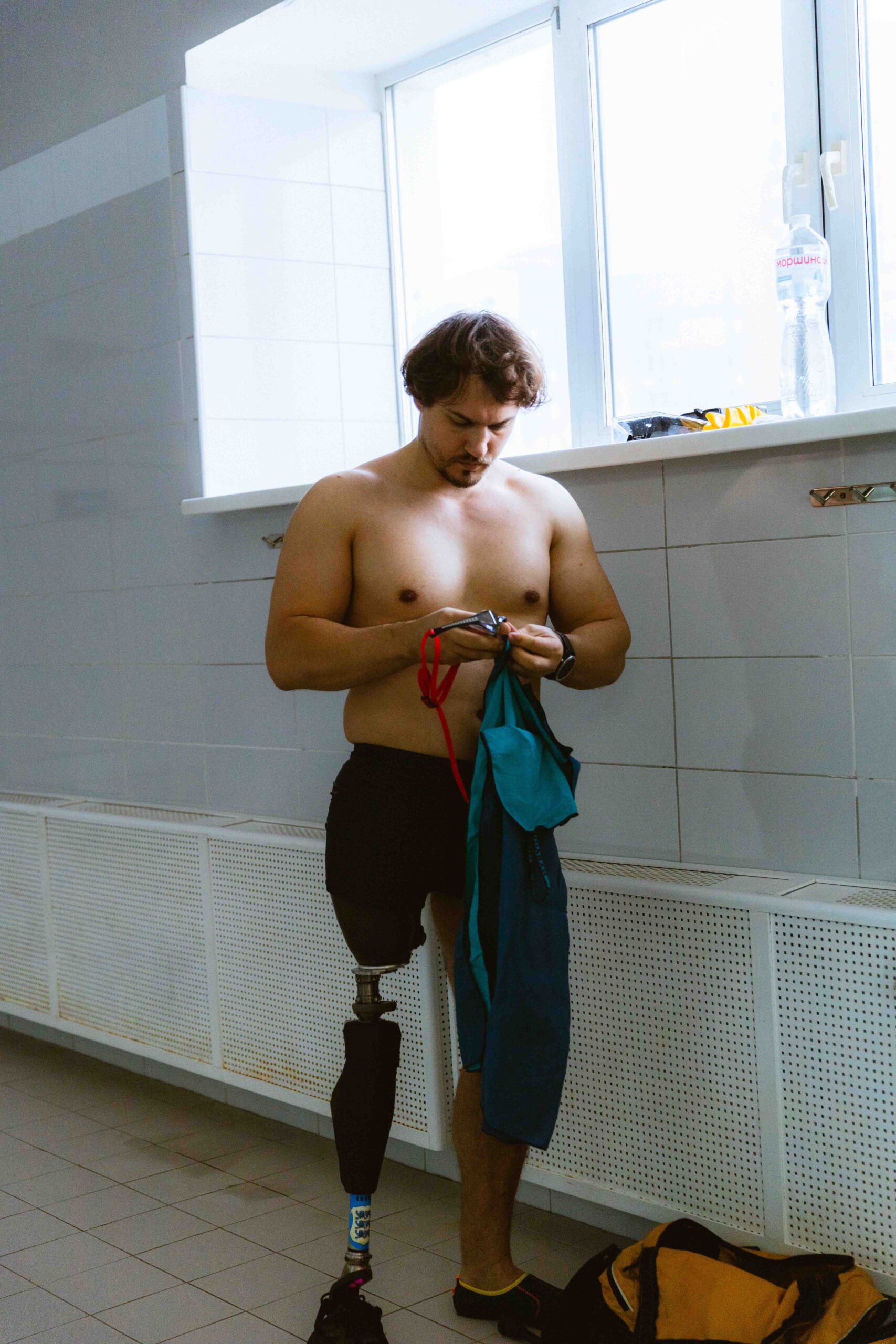
Despite having a high leg amputation, Mylin trains in regular gyms. He never even looked for adaptive ones. Instead, he set up a small workout space at home. Just a bench and a barbell — and he can do basic exercises anytime.
Limited gym hours aren’t the only reason for working out at home: icy roads have also forced the veteran to seek a safer alternative. During his first winter after getting a prosthesis, he stepped outside with extreme caution, carefully planning each step as he slowly walked along the slippery streets.
‘At first, I was a little scared, but you have to adapt. And after three years, you almost forget that you once doubted how to get around — for example, by train. Now you’re not embarrassed about it at all; you confidently do the things you used to do before the injury.
A Ukrainian in the Afghanistan team
In 2024, Artur was offered a chance to go to the Invictus Games in Düsseldorf — but only as a spectator. He felt out of place: he wanted to compete, not just watch. This drive extends beyond sports. In everyday life, he is just as principled: he doesn’t even drink coffee, because he avoids any kind of dependency.
Then he applied for the next Games, which took place in Canada at the beginning of 2025.
‘I heard there would be winter sports there, so that made it especially meaningful for me. Before my injury, I loved skiing, and I was curious to try it again after losing my leg. I tried it, and the experience was amazing’.
Besides biathlon, Artur competed in skeleton and swimming, as well as in team sports — wheelchair rugby and wheelchair basketball. He joined the Afghan Unconquered team, playing with fellow Ukrainian Illia Pylypenko and a group of American veterans. Other Afghan participants were supposed to join them, but they were not allowed to enter the country.
Переглянути цей допис в Instagram
‘It was such a bizarre situation, because the team had been given its name in advance, but the Afghan participants weren’t allowed to come. The plan was for five of them to be there, and we were going to join them to make a full team, otherwise, they wouldn’t have had a team of their own to compete’.
He met the team just a few hours before the start. But the lack of joint training didn’t stop them from winning bronze.
Artur also wanted to compete as part of the Ukrainian national wheelchair rugby team, but he wasn’t selected. As a result, he competed with the mixed squad, Unconquered 2.
‘They forgot the core message of the Invictus Games — that it’s not about sport. We’re not professional athletes. For most of us, many of these disciplines are something we try for the first time. Thanks to the Games, I had the chance to try biathlon, but there were also guys who already had experience and skills in team sports. So, the goal was to put together a strong team and, most importantly, win a medal. But that’s not how the Invictus Games work’.
In Canada, Artur was struck by how adaptive everything was — from doorways to people’s attitudes. Ukraine clearly has more wounded people with disabilities who need a more accessible environment than in Canada. In a small shop at the Whistler ski resort, he came across a line of eight people. But when they saw Artur, they all stepped aside, letting him go to the front of the queue
‘It struck me deeply, even though I sacrificed part of my health not for them, but for Ukrainians — here, at home. Our people rarely show that kind of appreciation, as if there’s nothing special about it’.
Not only service members were invited to the Invictus Games, but also their loved ones.
‘Support is very important. This whole sports journey — when you’re afraid, embarrassed, unsure, when the training feels uncomfortable and painful…’
After the first game of wheelchair volleyball, the participants’ bottoms were sore. Later, their loved ones joined them and also felt discomfort during the game. ‘We realized it wasn’t because of our injuries. It was uncomfortable for everyone’.
Artur brought his mother to the Invictus Games. She had supported him both during his rehabilitation and afterwards. While Artur was working hard in the gym, with no time for anything else, she would sometimes say she was bored, but still took part in various activities.
‘I didn’t even have a chance to spend time with her. She was probably a bit hurt about that. One day I had to go back to the hotel, so I rushed there, and two hours later my mother had already sent me photos with Meghan Markle’, Artur laughs.
‘LABORATORY TERRORISTS’
Dressed in a Rick and Morty hoodie, Artur admits he avoids films about the russian invasion. But once, he watched an American war movie with his sister. He couldn’t take it and started questioning everything.
‘I noticed that one of the characters was wearing his helmet incorrectly. I kept wondering why he was holding his rifle like that, why they were standing so close to each other. And I’m not even some kind of super-soldier, but these basic mistakes really stand out — you just think, what kind of nonsense is that?’ His sister asked him to either stop commenting or stop watching the film.
Since 2012, he has worked as a researcher at the Institute for Sorption and Problems of Endoecology. He specializes in green chemistry — a field dedicated to finding alternatives to oil-based production by synthesizing materials from natural, renewable sources.
After returning from rehabilitation, he expected to see an increase in the number of young researchers. ‘I thought people would turn to institutions like mine to avoid mobilization. But that didn’t happen: the number of PhD students didn’t grow’.
Artur also expected scientists to focus more on defense. ‘Usually, researchers develop wound dressings or protective coatings for drones. Those are great things, but they’re not meant to kill. We need to create things that can destroy the enemy. That’s what really matters’.
He discussed this topic with another speaker during the presentation of the Verkhovna Rada’s awards for young scientists.
‘I’m surprised that the state doesn’t involve the Academy of Sciences in the development and production of weapons or defensive structures. Their approach is: ‘Bring us a finished project, and we might consider it’. But in fact, we don’t even have the right to do that. We’re like some kind of, I don’t know, laboratory terrorists. We need real cooperation with the military and access to testing. But nothing changes, and that’s shocking’.
Since the idea involving explosives made no progress for two years, Artur decided to focus on 3D-printed children’s toys called ‘Sontsesiaichyk’.
A stand featuring them was set up among veteran-run businesses at the ‘Rukhʼ’ competitions. Children and the families of service members could take a break from ‘guys lifting weights like crazy’ and paint figurines of Ukrainian folklore characters — Kotyhoroshko, Mavka, and Pan Kotskyi.
Переглянути цей допис в Instagram
Artur applied for the ‘Zhyty na zustrich 2.0’ grant program offered by PUMB. ‘I asked for a lot of money — one million’. But his expectations weren’t met: new entrepreneurs are rarely given the full amount they request.
Artur notes that business has a completely different atmosphere: in sports, everyone supports one another, but here, it’s all about competition. Still, he believes that economic rehabilitation is just as significant as physical, mental, or medical recovery.
‘You see that you can earn money and that you’re no longer just a passive recipient of care from your mother, wife, or loved ones. You see that you have the power to achieve something on your own’.
‘Not every veteran has to be an athlete or a bodybuilder— they can also become entrepreneurs, intellectuals, and inventors’.
Feel the water
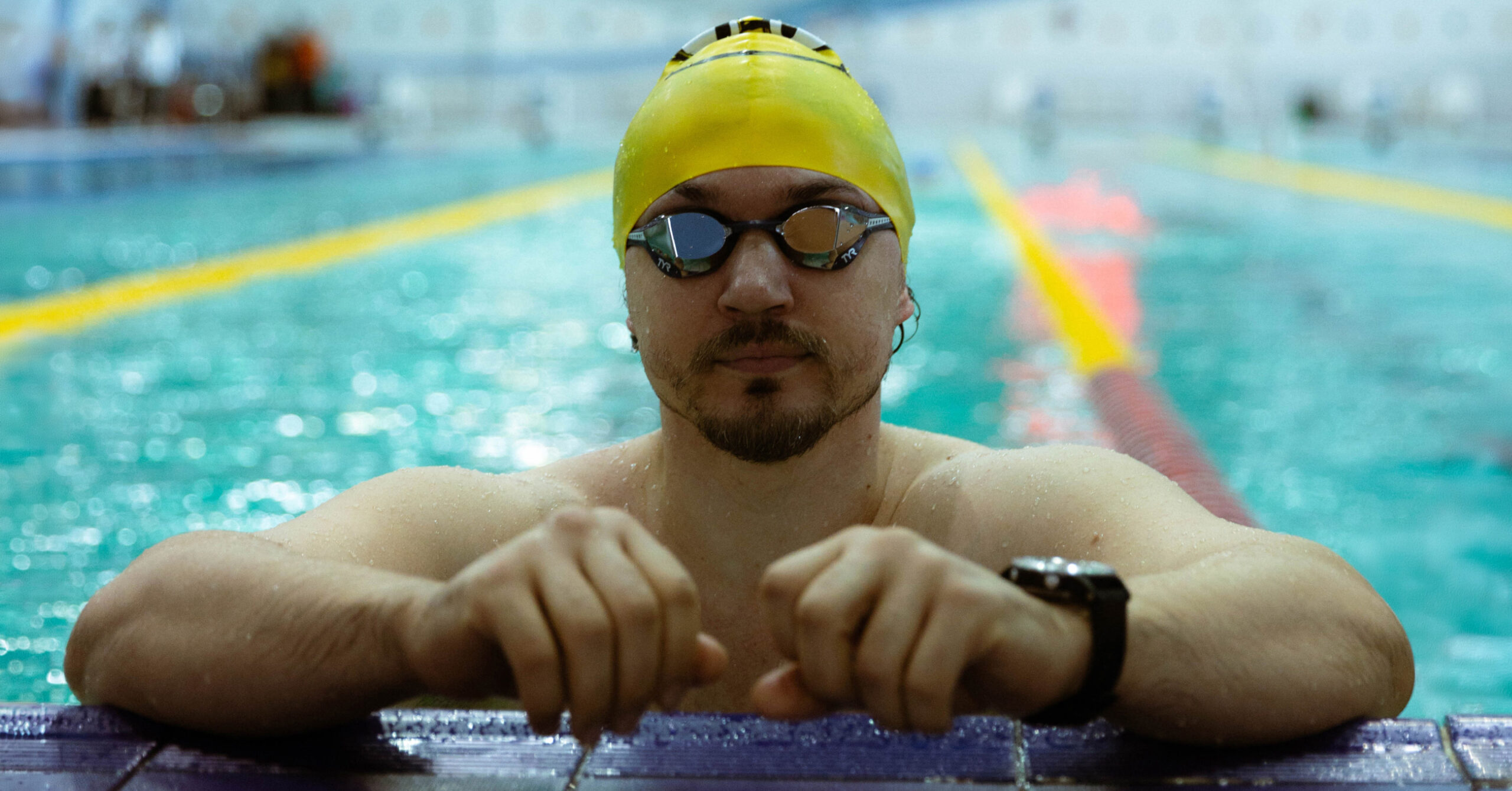
Two years after his recovery, Artur has already taken part in more than twenty competitions. He admits that running is the hardest part for him. That’s why one of his toughest challenges was the SUBARU TRIATMAN SERIES triathlon, held in the Kyiv region in the summer.
About thirty veterans and service members gathered at the starting line. They faced an almost standard sprint-distance triathlon: 700 meters in the water, a 15-kilometer bike ride, and a 5-kilometer run.
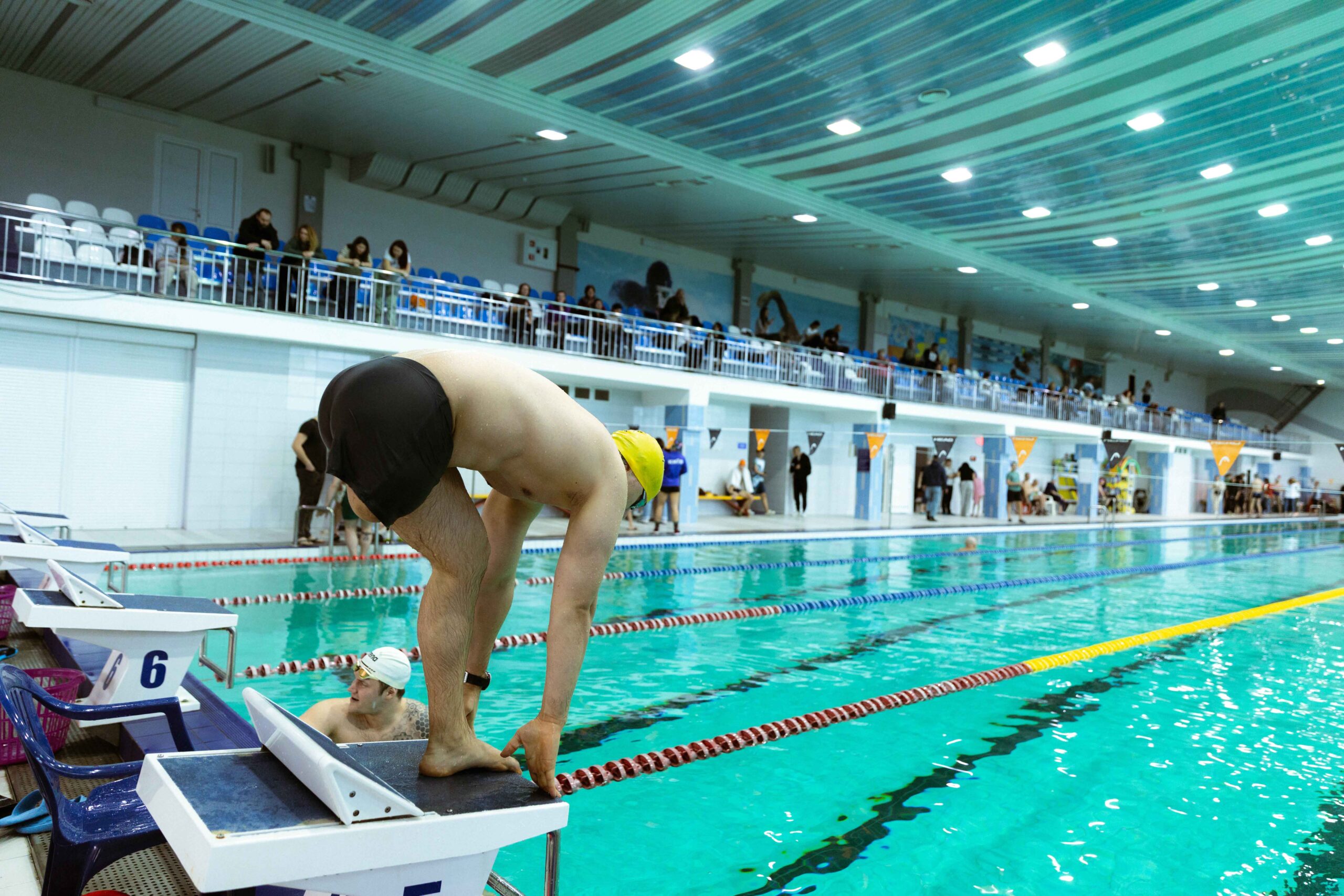
‘I had to swim seven hundred meters in the Dnipro. I said it would be the last time’.
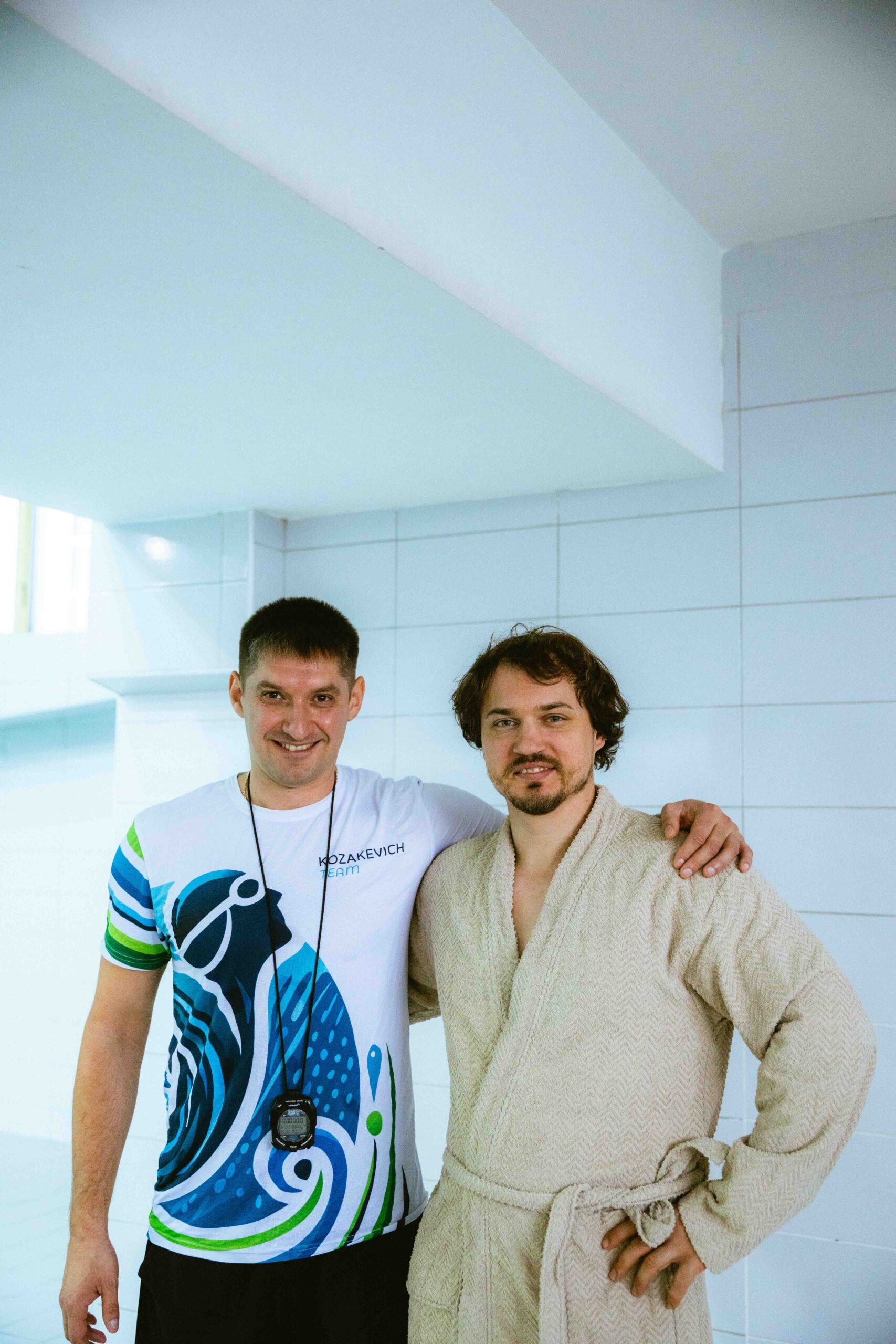
Although he stopped running, he didn’t give up swimming. The final competition of 2025 was the charity ‘Christmas Starts’ in Brovary. Among the judges was Ihor Kozakevych, who had also been preparing Artur for the swimming events at the Invictus Games.
‘Before the race, we talked, and Artur asked what he should do. We set a distance for him, and he trained in the pool for about half a year before the Invictus Games. Shortly before the competition, he noticed there were many strong competitors in freestyle, so he chose breaststroke instead [where he won gold]’.
When I ask how long Artur prepared for the ‘Christmas Starts’, he laughs and says he didn’t prepare at all.
Ihor adds: ‘He wasn’t swimming at all — he just signed up and said he would take part. But you have to swim regularly to feel the water. And Artur already knows all this and has really worked on his technique’.
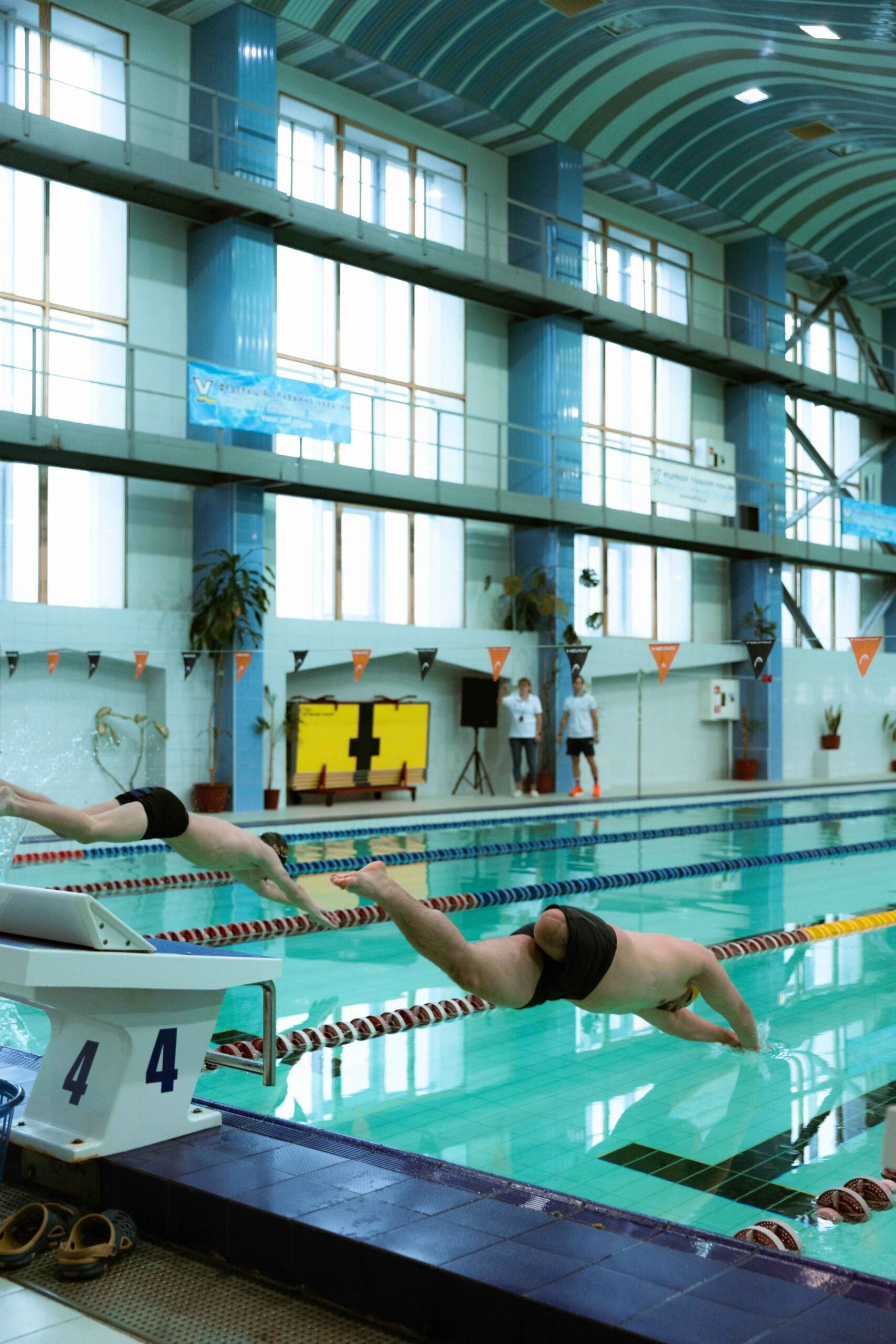
Mylin is now aiming for a professional standard and no longer attends every sporting event he’s invited to. For him, the priority is true competition — with athletes who completed their rehabilitation long ago and have serious experience.
Competing against the newly rehabilitated often leads to predictable results. The gap is too wide: while some athletes have years of practice, others are just beginning their journey back to sports after their injuries.
Artur has now joined the Kyiv regional powerlifting team. While the Ukrainian Championships are his next step, his long-term goal is even more ambitious — the Paralympic Games. Artur admits that without a clear goal in mind, it’s impossible to push yourself to train three times a week. That goal is what keeps him motivated.